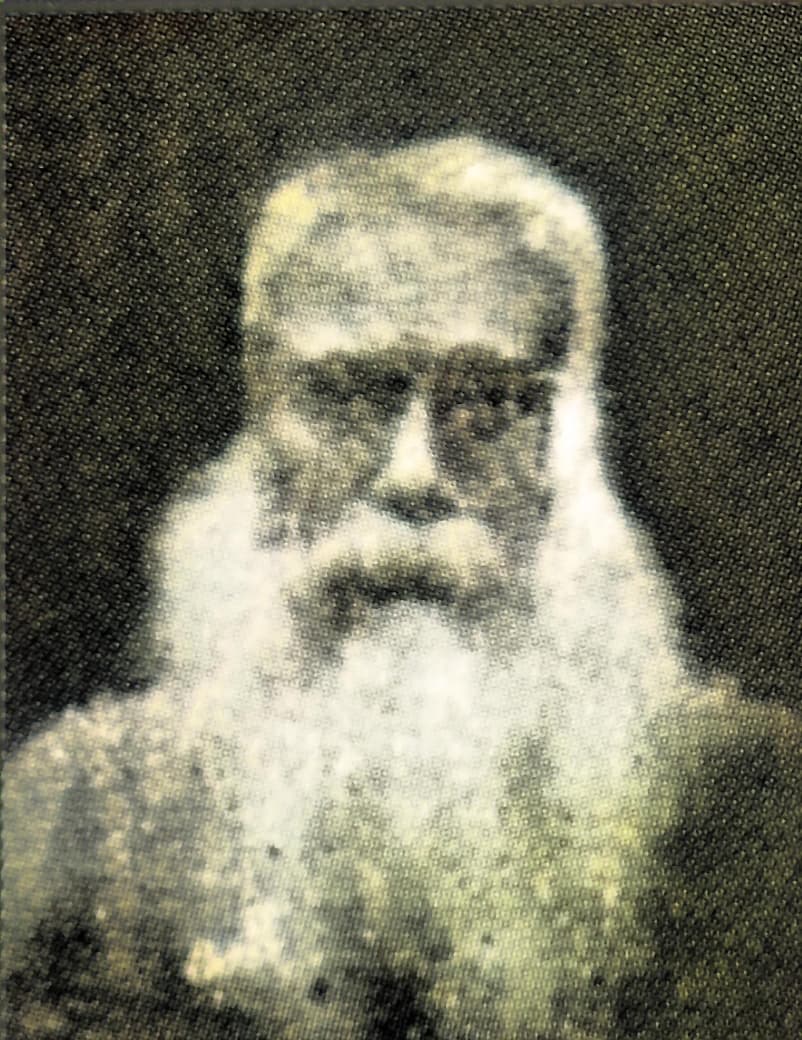
Lohit Chandra Nayak
Pioneered the establishment of Barpeta Road Railway Station
When we think of the naming and establishment of Barpeta Road Railway Station, we all think of a man named Lohit Chandra Nayak, a resident of Dakshin Hati, Barpeta. He was a public leader, a famous writer and a prominent social worker. That is why everyone called him a folk hero. Lohit Chandra Nayak was born in 1868, the only child of late Siddhiram Nayak of Barpeta. From childhood, Nayakdev was always engaged in constant efforts for the betterment of the motherland. He passed the entrance examination with distinction from Barpeta High School in 1887 and went to Calcutta. There he received his F. A. B. A. and then He passed the B.L. examination. In Calcutta, he came to the great circle of assamese legend Lakhminath Bezbaruah, Chandra Kumar Agarwalla, Gyanadabhiram Baruah etc. He was one of the the founders of the Assamese Language Promotion Society or A. B. U. S. Sabha in 1888 in Calcutta. At one time, Nayakdev also held important positions such as the editor of the programme. He also played a significant role in establishing the Assamese Chhatra Sahitya Sangha in Calcutta to counter the threat of endangerment of the Assamese language throughout Assam. In 1897, he organized a conference of many people for the welfare of the people in Barpeta under the name of 'Hit Sadhini Sabha' and was entrusted with the responsibility of being the secretary of this conference. In 1917, when the first session of the Assam Sahitya Sabha was held in the historic city of Shivsagar, Assam, under the chairmanship of Ray Bahadur Padmanath Gohani Barua, Laxminath Bezbarua and Lohit Chandra Nayak were invited from Calcutta as special expatriate representatives. After graduating in law in Calcutta, he began practicing law in Guwahati. In 1918, he was appointed a Hakim. However, he resigned from this post during World War I. In 1922, he was elected a member of the Legislative Council and served a full two-year term. At the same time, he was elected as the first non-official Chairman of the Barpeta Local Board and held this post for a total of seven consecutive years. During the Indian Independence Movement in 1930, he wrote in his own handwriting to protest against the infamous Cunningham Circular of the British Government. While in the Legislative Council, he noticed that the people of Barpeta had to board a train at Sarupeta station to travel by train to Guwahati or Calcutta. There was no road from Howly to Sarupeta, which caused a lot of inconvenience to the people. He contacted the British Government and the railway authorities and requested them to set up a Rail station between Sorbhog and Sarupeta to overcome this inconvenience. The government and the railway authorities agreed with Nayak and finally decided to set up a railway station in the then village of Athiabari. The British Government and the officials of the Railway Department decided to name the new railway station at Athiabari as ‘Lohitpur’ after the name of Lohit Chandra Nayak. Nayak later learned of this and opposed it. He also requested all concerned to name the station 'Barpeta Road' to enhance the pride of Barpeta Satra. The station was renamed Barpeta Road and later the village of Athiabari was transformed into the town of Barpeta Road. He passed away on 30 December, 1947.